
Bellona’s Alexander Nikitin on the unraveling of environmental agreements with Russia
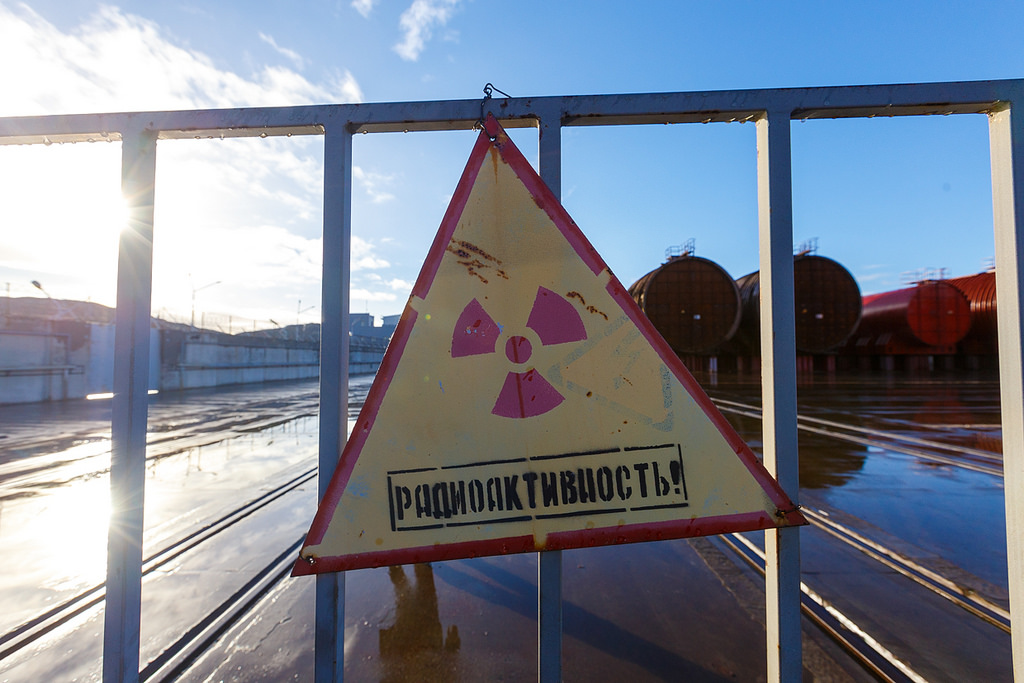
Russia has officially withdrawn from an international environmental agreement that brought to bear billions of dollars from EU nations and the United States on addressing the nuclear legacy of the Soviet Union.
The so-called Multilateral Nuclear Environmental Program in the Russian Federation (MNEPR) had since 2003 brought together financial and technical resources from some of Europe’s biggest economies, as well as institutions like the European Commission, to launch massive efforts to clean up decommissioned Soviet nuclear submarines and the irradiated bases in the Arctic that served them.It had also broadly functioned as an instrument of hope by providing an arena where Russia and the West could come together and work to improve the environment for people on both sides of what used to be the Iron Curtain. The cooperative agreement had endured some of the most trying political disputes of the early 21st century, such as Russia’s annexation of Crimea. Even Russia’s invasion of Ukraine hadn’t officially killed it. But in a terse announcement late last year, Russian officials reported they had prepared a “denunciation” of the MNEPR, which facilitates Moscow’s withdrawal from the agreement—a legal necessity under Russian law given that the agreement was ratified by Russia’s parliament.
Earlier this year, Bellona’s Alexander Nikitin—who was instrumental in helping Europe and Russia direct much of the agreement’s funding—sat down with journalist Vladislav Gorin, who runs the What Happened podcast for Meduza, the independent Russian newspaper now published in exile from Riga, Latvia, to discuss what this agreement accomplished, and what it’s unraveling will mean. We’re grateful to Meduza for allowing us to publish this edited and translated transcript of their interview.
Vladislav Gorin – Which agreement is Russia withdrawing from now?
Alexander Nikitin – This is the so-called Multilateral Nuclear Environmental Program, adopted and ratified by Russia in 2003. It is unfortunate that the country is leaving the program so easily now because we know how important it was for environmental protection efforts. In addition to this program, there were many other significant programs at the time of its development and ratification, which funded various projects aimed at eliminating the so-called nuclear legacy of the Soviet Union.
What has been accomplished since the program was enacted in 2003?
The first program that was adopted was the so-called Cooperative Threat Reduction (CTR) Program, also known as the Nunn–Lugar Program, initiated by U.S. Senators Sam Nunn and Richard Lugar. This was a massive program that began after the collapse of the Soviet Union and lasted until about 2010. It focused on eliminating excess nuclear, chemical, and biological weapons, as well as their delivery systems.
At the same time, there was another program known as the HEU-LEU Agreement or the “Megatons to Megawatts” program. This was negotiated between the U.S. and Russia in the late 1990s. Under this agreement, approximately 500 tons of highly enriched uranium (HEU) were to be converted into low-enriched uranium (LEU) and used in nuclear power plants. The process was expected to take around twenty years—since it was signed in 1995, it was set to run until 2015.
Additionally, the G8 agreed on the so-called Global Partnership. In 2002, at the Kananaskis Summit in Canada, the G8 signed this agreement, often referred to as “10 plus 10 over 10.” Under this agreement, Russia received $20 billion—$10 billion contributed by the G8 countries and another $10 billion from the United States. In total, $20 billion was allocated over ten years to dismantle excess nuclear weapons and their delivery systems.
Why am I listing all of this? Because MNEPR, the agreement we are discussing today, was a crucial framework that encompassed all these programs. It allowed for the coordination of essential bureaucratic matters, such as tax procedures, nuclear safety regulations, and legal responsibilities, ensuring the effective execution of these programs and projects.
This was vital because bureaucracy functioned according to its own rigid rules on both sides. Without coordinating the procedures outlined in the Multilateral Nuclear Environmental Program, it was often impossible to utilize the allocated funds. For instance, $20 billion was secured under one program, $10 billion under the CTR program, and about $10 billion under the HEU-LEU program. These were enormous sums contributed by multiple countries, but their use was frequently hindered by the lack of agreed-upon procedures.
Another initiative was the “Northern Dimension Environmental Partnership”, which included a project called “The Nuclear Window.” This project specifically dealt with nuclear waste management, in addition to general environmental initiatives addressing water and conventional waste. The Nuclear Window focused on dismantling nuclear submarines, handling spent nuclear fuel, and managing radioactive waste storage sites in northern and eastern Russia. Contributions to this project came from Northern European countries and the European Commission, while the European Bank for Reconstruction and Development managed financial transactions.
However, for all these programs and projects to function, the MNEPR agreement was necessary. I haven’t even mentioned other agreements between, for example, the U.S. Department of Defense and the Russian Ministry of Defense. The funds gathered through these initiatives had to be used according to the regulations of both donor countries and Russia. That’s why MNEPR was essential, and why it was eagerly awaited. Bellona, where I was already working at the time, closely monitored these agreements and helped initiate these programs, as environmentalists were deeply concerned about eliminating Russia’s nuclear legacy in the north.
MNEPR was adopted and ratified in Russia in 2003 and remained in effect. Some Russian media claim that it ended around 2017. However, the reality is different—it wasn’t just about funding running out (although some projects did face financial constraints as some countries left while others remained involved until 2022, when the war began). The real significance of MNEPR was in regulating procedural matters. That is what we now regret—the fact that Russia’s withdrawal has ended this regulatory framework.
Spent nuclear fuel in dry storage at Andreyeva Bay before remediation efforts began:Approximately 22,000 spent nuclear fuel assemblies were stored here, some of which were damaged and thus resistant to disposal by conventional means. Photo: Bellona
Cleanup at Andreyeva Bay
Why is Russia withdrawing? What does the explanatory note say? Should we blame Russia for this decision, considering the war and sanctions? Funding from Western countries for anything related to Russia would likely have been problematic anyway. Wouldn’t these projects have stopped regardless?
Some projects have indeed stopped, but others might have resumed in the future. The legacy we are dealing with still requires attention. For instance, there are still sites in northern Russia that need financial investments to complete cleanup operations.
For example, in Andreyev Bay, some spent nuclear fuel remains in an emergency storage facility, a well-known issue we have reported on extensively. We continue to monitor this site daily. Similarly, the Gremikha submarine base remains in limbo because several nuclear-hazardous facilities there have yet to be fully decommissioned and made safe.
However, our greatest concern is the sunken and submerged nuclear and radiological hazards.
Recently, we published a review examining the state of these hazardous objects before the war and predicting their future under the current circumstances—given the war, sanctions, and the withdrawal of international participants, leaving Russia to deal with them alone. According to our data, at least six sunken nuclear-hazardous objects remain—primarily nuclear submarine reactors still containing spent nuclear fuel. Ideally, these should be recovered.
Beyond that, there are 17,000 containers and various small vessels containing radioactive waste, which have been officially recorded as sunk. These must also be monitored. While they may not pose an immediate threat like spent nuclear fuel still inside reactors, ongoing observation and decision-making are necessary.
The Arctic and Northern Seas, where these objects are submerged, will always be of critical importance—regardless of the war, political situations, or any other circumstances. The Arctic will remain the Arctic.