
Environmental Racism, COP and Youth: What is the relationship?
Marcele Oliveira discusses the importance of young people in the environmental agenda, clarifies ways of climate engagement, and unravels how environmental racism projects itself in territories
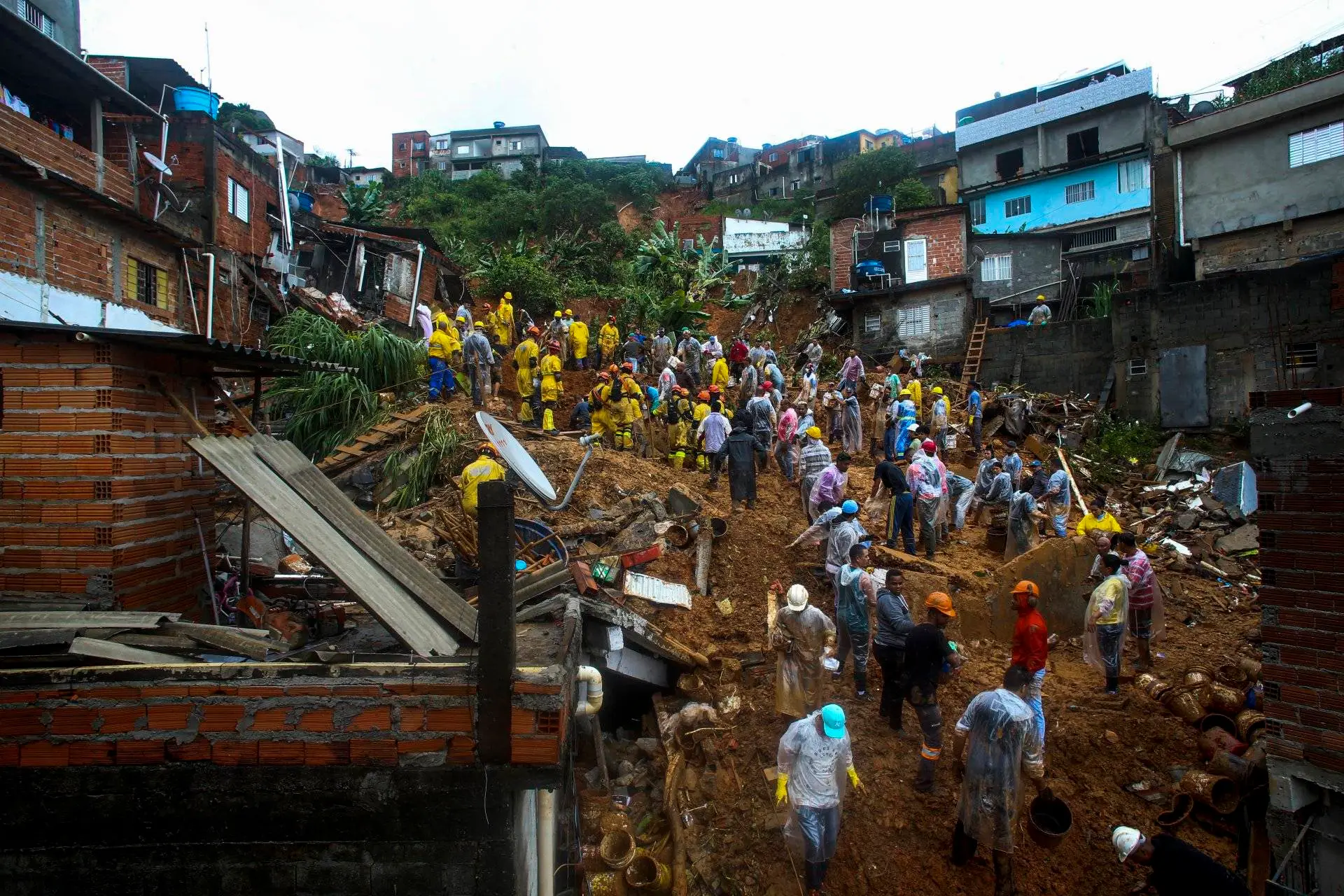
The best way to start the climate fight is on the territory. After all, the crisis is global, but the solutions come from local action. This was the main theme of the conversation between geographer Bruno Araújo and Marcele Oliveira, executive director of Perifalab, on the Podcast Planeta A. "Environmental racism today, for me, is not just a concept. It's an accusation, the understanding that the crisis, which is now gigantic, was not caused by these communities. But it's hitting there first because it's been hitting there for a long time," Marcele commented when discussing environmental racism.Focusing on the role of youth in combating climate change, the conversation between Marcele and Bruno, recorded in September 2024 and republished in full by ((o))eco, revolves around the activist's history in the environmental fight, types of local solutions, Marcele's participation in COP28 and 29, and how each person can – and should – engage in the climate agenda. "As a young, black woman, I see these challenges and feel urgency. And I notice that those who have urgency are already talking and thinking about this issue, perhaps not naming it, like climate justice, environmental racism, forest protection, standing forests... Maybe not saying that, but saying that basic sanitation needs to improve, saying that we need to know and respect the biomes of the country. I find it interesting to think about that future, which to exist, has to have today," she said.
Marcele Oliveira is a cultural producer, communicator, and climate activist. She researches the interaction between culture and climate change, with an article published in the pioneering research of C de Cultura and Another Wave Content. She is currently the executive director of Perifalab, following the climate agenda since 2019 with the Realengo 2030 Agenda, which operates in the West Zone of Rio. She is a co-founder of the Coalition "Climate is Change" and is part of the team of Young Climate Negotiators for the Municipal Secretariat of Environment and Climate of RJ.
Listen to the full episode of the podcast Planeta A:
Bruno Araújo: What awakened you to the environmental and climate discussion? Did you have anyone who inspired you? Did you participate in a specific struggle?
Marcele Oliveira: Just like everyone else, I spent a lot of time thinking that the environmentalist cause was about hugging trees and something for white people in the South Zone. And then, at some point in 2019, I start to perceive an articulation in my territory. I'm from Realengo, West Zone, hello, West Zone! This articulation in my territory holds a debate about the implementation of a green park and, because of it, adopts a dialogue and a premise of awareness, which passes through several territory problems and vulnerabilities that can and should be resolved through public policy.
And so I started to think of that green park as a place where we could explore. It's a memory that concrete makes us forget we have, but the West Zone was much greener. It's still quite green, still has a rural experience in some places. So this reconnection made me look at that green park that is now implemented there. The Susana Naspolini Park, which is the fruit of social struggle, made me think about biomes, about what is happening to the Atlantic Forest biome, about what are the issues we are dealing with in basic sanitation... I also learned a little about what environmental racism is, which is perceiving these vulnerabilities related to issues concerning nature, which are always in the same ZIP code, affecting people of the same color. So, what does that mean?
And then I got very intrigued about how in the fight for the Realengo Green Park, a cultural occupation, an artistic occupation called Parquinho Verde, greatly expanded the meaning of the struggle, the meaning of the debate. That's when we got to know each other, for example. And then you see people mobilized to talk about the territory, the neighborhood, the city of Rio de Janeiro, and to think about how this city could be greener was something very innovative and perhaps very solitary and much of that talk of "it's someone else's problem, not mine."
The fight for the park, mainly with the green playground, we started to see that there were a lot of people around who wanted to see change in their territories, who wanted to discuss a bit about what we do with the waste, how we can carry out reforestation campaigns, and how we demand public policies that are not just about concrete, asphalt, and building shopping malls, but about open-air leisure areas.
We found that there were many of us, so it made sense to think about a 2030 agenda. An agenda of goals that we should and could influence and demand so that the air would be cleaner, so that the food would have less agrotoxin, and so that art and culture could drive this debate.
And when I saw, it was already very important to talk about the environment, in order to talk about territory, to talk about myself, to talk about Realengo, to talk about the park, and to talk about the future. And art and culture, where I was trained, as a cultural producer, were partners, strategic allies to talk about this to even more people. I looked and thought, "I want to work with this."
This struggle in Realengo is a fight that spans generations. When you arrived, and also when I approached this fight, we found several generations that had been mobilizing for a long time to fight for that park that has finally been established, in a time in the past when the debate on climate change did not have the vigor it has today, floods affect us much more today than 40, 30 years ago. How do you feel the impacts of climate change in your daily life? The impacts, whether from the floods themselves, heat impacts, the impacts on how you observe life, on anxiety, on the way you are, on your work...? How is it to live in this world where we are immersed in the climate crisis, but also not to stop being young, from having to work and to have to pay, right?
I have been noticing that there is also a shared and intergenerational responsibility, and always with an eye to the future and what comes after. And I think our generation is one that doesn't know much about what comes after.
When you talk to people involved in the fight for nature, for Guanabara Bay, for biomes, for Brazil, you hear the indigenous communities, the quilombola communities, that cry of urgency, it's not a cry from yesterday, but yesterday it seems that every day tomorrow is getting more confused and difficult, with disputes, not just the one between humans and humans, not just war, not just politics, it's the river drying up. What are you going to do with the dried-up river, do you know? What are you going to do with the crop that didn't grow?
São situations that we have not lived in the historical recording time and that we are building now as we do. So, as a young black woman, I observe these challenges and have urgency. And I notice that those who have urgency are already talking and thinking about this subject, perhaps not naming it, such as climate justice, mental racism, forest protection, standing forests... Perhaps not saying this, but saying that basic sanitation needs to improve, saying that we need to know and respect the biomes of the country. I find it interesting to think about that future, which to exist, must have today.
Last year, a survey called Youth and Environment, from 2022, reveals that 66% of young people perceive that the climate crisis affects the rich and poor in different ways. However, only 24% of these young people, according to the same survey, know what environmental racism means. And I wanted you to explain what environmental racism is. Does it really exist?
Friday, April 4th. Santa Paula, Fray Angélico Station, La Huizachera, Vista Hermosa, El Castillo DIF.
Environmental racism has been discussed in the last five years, talking about the Realengo Green Park, identifying that the non-implementation of the park was a case of environmental racism because Realengo is a peripheral territory and far away, hearing "Why do these people want a green leisure area? They don't need it." In the case of the indigenous communities' struggle, talking about demarcation, it is an urgent issue, an issue that identifies a case of negligence and also places in the city of Rio de Janeiro, such as Volta Redonda, or if we think about what is happening in Alagoas, which is a capital, and you look there at a scenario where everyone knows that it is wrong, everyone knows, but what happens? Is it just an indemnification? How do we better organize this progress, this advancement, this future, without stepping over everything, everyone? And currently, we are stepping over entire cities and forests. I think we have already gone beyond what we should have and the business has lost a bit of track.
This is environmental racism. I think environmental racism is thinking that over there in the United States, when they came up with a term with Dr. Benjamin Franklin, they were talking about toxic products being dumped in a specific part of the city. Without any prior consultation. And it was a part of the city that was more vulnerable, impoverished, with a majority of peripheral population, black population, and then they looked and said "this is not right, why is it like this? Who is making these decisions and what criteria are being used for these decisions? What criteria are we using for these places? – We are not. In fact, they and they are there with the pens – for one place to have basic sanitation and another not? For one place to have selective collection and the other not? For some types of nutritional information to reach one place and not another?"
So today, my understanding of environmental racism is also very much that state of neglect. It has been 500 years trying to reverse the history that blacks, poor people, and peripheral and marginalized individuals do not have the right to a quality of life, to breathe clean air, to receive good education... So we have been talking about racism for a long time. And then it's to think about what happens to nature and how places have been urbanized without thinking about what would happen to those trees, those lands, and everything has turned into concrete, but it ends up in a more privileged area of the city, where there are trees, winter gardens, preserved leisure spaces.