
Integral Ecology: Church and Civil Society for the Preservation of the Water Sources of Greater São
Paulo
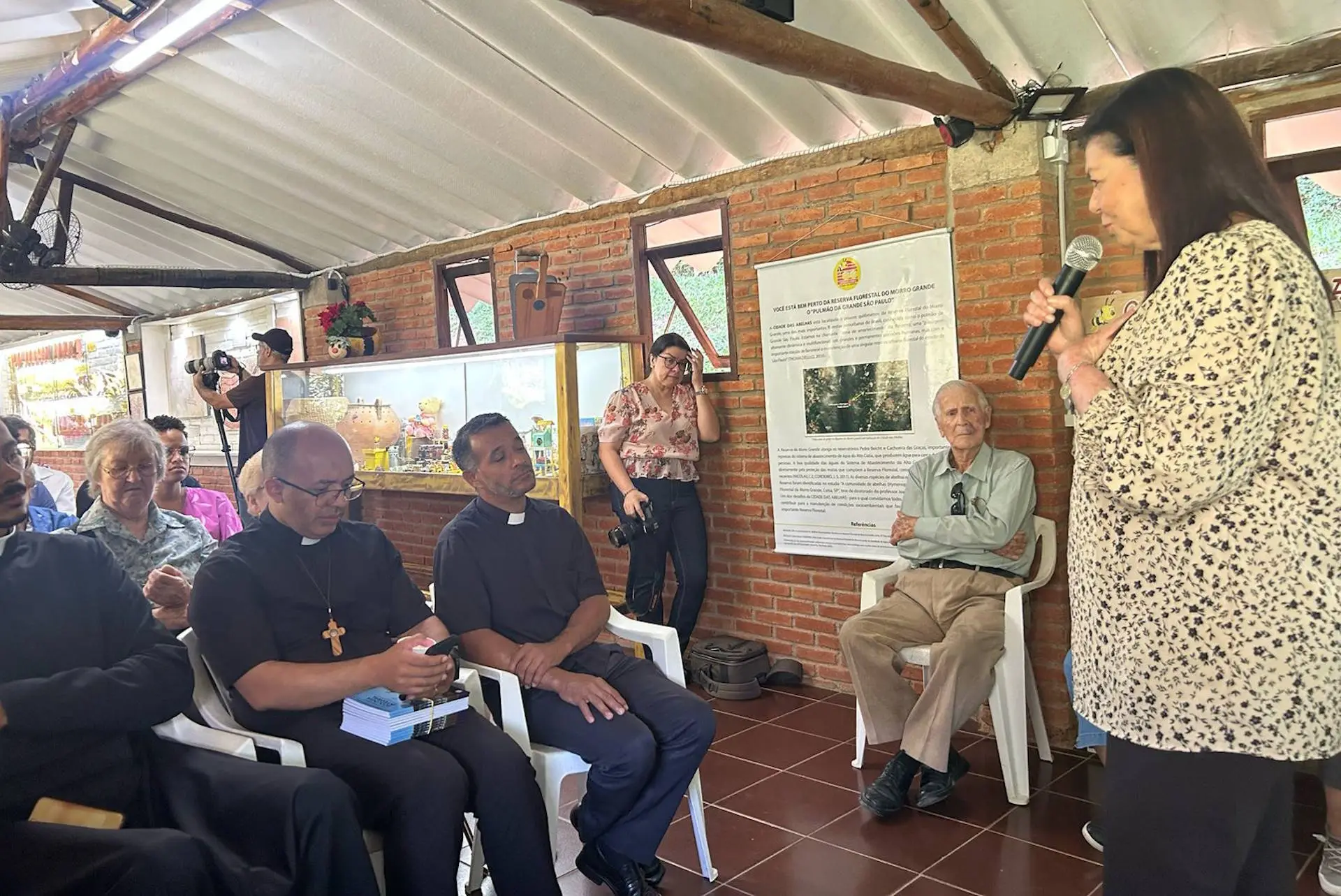
Three years after our call for religious participation in the defense of the water sources, disseminated by ((o))eco, the dialogue remains active from the project of the City of Bees
In 2021, alongside the founders of the Ecological and Cultural Park City of the Bees, I wrote the article "How to Halt Water Crises, Current and Future?" for ((o))eco. At the time, we alerted to the disorderly advancement of urban occupation over strategic water catchment areas of the Greater São Paulo region, particularly the Guarapiranga and Alto-Cotia systems, which supply millions of people in the metropolitan area. Among other proposals, we suggested that religious organizations, with a strong and historical presence in this territory, should join more effectively in the efforts to preserve water and biodiversity, acting in synergy with civil society initiatives.Since then, we have maintained and deepened this commitment. Under the guidelines of the Laudato Si' Movement – a global initiative inspired by Pope Francis's encyclical – our work has followed two fronts. On one hand, we collaborate with civil society organizations and collectives that operate in the southwest region of the Greater São Paulo area in actions to contain environmental degradation and mediate socio-environmental conflicts. On the other hand, we have focused on the education of children and young people about integral ecology and the preservation of water sources.
In 2025, the National Conference of Bishops of Brazil (CNBB) breathed new life into this work by electing integral ecology as the theme of the Fraternity Campaign. In this context, the Parque Cidade das Abelhas decided to mark the celebration of its 45 years of activities in the same week as the opening of the Campaign, inviting representatives of the Catholic Church to a dialogue about the socio-environmental challenges of the Diocese of Campo Limpo territory. This ecclesiastical district covers a significant part of the southern area of the capital of São Paulo and the municipalities of Embu das Artes, Embu-Guaçu, Itapecerica da Serra, Juquitiba, and São Lourenço da Serra – all inserted in areas of protection for very important water sources in the Metropolitan Region.
The event, which took place on the last day of March 8, brought together Bishop Valdir José de Castro, ssp, the diocesan bishop and president of the Episcopal Commission for Communication of the CNBB, as well as priests, religious sisters, and parish leadership of the Diocese. It was also an opportunity to strengthen dialogue with civil society organizations in the region, such as the traditional Sociedade Ecológica Amigos de Embu (SEAE), the Sociedade Amigos dos Bairros do Ressaca e Caputera (SABRAC), the Observatório do Turismo de Juquitiba, and the Comunidade que Sustenta a Agricultura (CSA). Civil authorities and social leaders were also present.
During the conversations, we retrieved the environmental resistance history of the region, which dates back to the 1970s, when the Catholic Church, through Irish missionaries of the Saint Patrick Society, mobilized residents and farmers to join the movement of ecologists against the construction of an airport that would put the Morro Grande Reserve at risk. This mobilization, combined with various efforts of civil society, resulted in the approval of the Reserve protection law in 1979, ensuring the integrity of one of the most important remnants of the Atlantic Forest in São Paulo and its water sources.
The City of Bees, founded immediately after this victory of the environmentalist movements, continues to be a space for ecological education that welcomes thousands of children every year. More than teaching about the importance of bees, the park seeks to raise awareness about the direct connection between forest conservation and the quality of water that supplies millions of people. Right at the entrance, the image of St. Francis of Assisi greets the visitors, reflecting the proposal to unite spirituality, science, and transformative action.
As Catholic Church leaders recognize that the environmental crisis has worsened in recent years, demanding ever more resolute responses in this environmentally strategic territory. A concrete example of this commitment is the traditional Romaria das Águas, held every June in the Diocese of Campo Limpo territory. On this occasion, faithful from various communities gather to symbolically "embrace" the Guarapiranga dam, in a public act of faith and mobilization for the protection of the Common Home and the preservation of the water resources that supply millions of people.
From the meeting in the City of Bees, new opportunities for dialogue and joint action between the Church and civil society organizations have opened up, driven by the context of the Fraternity Campaign. Alongside the SEAE – which this year celebrates 50 years of activity –, we have realized the importance of mapping areas that may have their legal protection strengthened, including as conservation units, in the face of imminent threats, such as the extension of the Raposo Tavares Highway ("Nova Raposo"), which could drastically affect the water sources between Cotia, Embu das Artes, and Itapecerica da Serra.
SABRAC, on the other hand, demonstrated great capacity for coordination with local authorities, addressing crucial issues of the territory, such as sanitation, security, and environmental signage in the surroundings of the Morro Grande Reserve, which houses the Alto-Cotia water supply system, as well as its rich biodiversity. The Juquitiba Tourism Observatory, with its excellent technical expertise, showed that it is possible to implement sustainable economic activities compatible with the protected areas of the water sources.
In the same direction, the local unit of the CSA highlighted the potential of regenerative agriculture and organic production in a territory that, to a large extent, abandoned its productive vocation, despite its proximity to the metropolitan center and the potential to ensure supply, clean production, and water conservation.
Finally, an extensive agenda that, as Bishop Dom Valdir José de Castro reminded us, has the Fraternity Campaign only as its initial milestone. May it be so!