
Submerged cities and vulnerable populations: what the great floods in Brazil in recent years reveal
Grey infrastructure solutions and emergency-oriented solutions predominate, while systemic adaptation strategies remain secondary
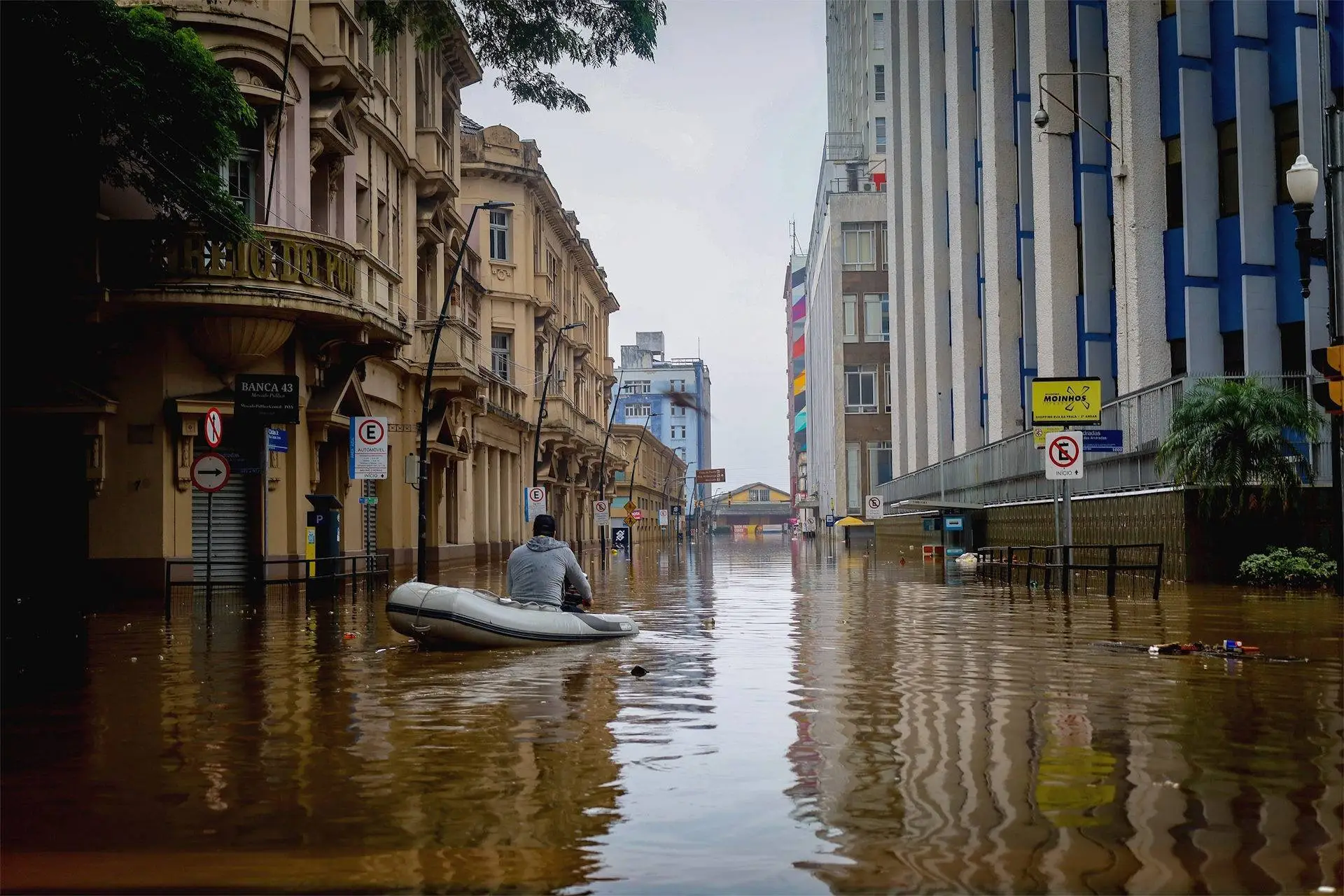
On the morning of May 5, 2024, the Guaíba River reached 5.35 meters and overflowed, flooding Porto Alegre and disrupting the routine of the capital of Rio Grande do Sul for weeks. It was the peak of a process that had already been announced: between April and May, heavy rains affected more than 90% of the municipalities in Rio Grande do Sul, causing 172 deaths, displacing about 600,000 people, and economic losses estimated at R$ 4.6 billion. The image of the submerged city resonated internationally and revealed the structural vulnerability of Brazilian cities in the face of extreme climatic events.On the morning of May 5, 2024, the Guaíba River reached 5.35 meters and overflowed, flooding Porto Alegre and disrupting the routine of the capital of Rio Grande do Sul for weeks. It was the peak of a process that had already been announced: between April and May, heavy rains affected more than 90% of the municipalities in Rio Grande do Sul, causing 172 deaths, displacing about 600,000 people, and economic losses estimated at R$ 4.6 billion. The image of the submerged city resonated internationally and revealed the structural vulnerability of Brazilian cities in the face of extreme climatic events.
This article analyzes recent flood episodes in the country, identifies structural factors that exacerbate the impacts, and discusses paths for climate adaptation.
Extreme events and their impacts
Data from CEMADEN reveals that the majority of climatic disasters are related to floods and landslides, concentrated in densely urbanized and unequal regions. The worsening of the climate crisis, according to the IPCC AR6 Report (2023), is associated with the intensification of the hydrological cycle and the increase in the frequency of heavy rains, phenomena that are already shaping a new climatic regime in the country.
This same IPCC report (2023) shows that extreme precipitation events have been becoming more frequent since the 1950s. Global warming intensifies the hydrological cycle, alters atmospheric patterns, and contributes to phenomena such as El Niño, anticipating episodes that previously occurred in centennial intervals.
This new climatic pattern is compounded by local factors such as deforestation, soil sealing, urbanization in risky areas, and precarious infrastructure. This combination explains the recurrence of tragedies in recent years. Between December 2021 and February 2022, floods in the South of Bahia and the North of Minas affected more than 850,000 people. In February 2022, Petrópolis recorded 233 deaths following landslides. In 2023, São Sebastião faced 682 mm of rain in less than 24 hours — nearly triple the monthly average — and in 2024, Rio Grande do Sul experienced the largest climate disaster ever recorded in the country, according to climatologist José Marengo.
Understanding the different types of floods is essential for formulating preventive and adaptive measures. Not all floods are the same – and this distinction matters.
In São Sebastião (2023), a heavy rainfall of 682 mm in less than 24 hours caused a flood, combined with coastal flooding, as high tides over two meters prevented the outflow of water to the sea. The urban drainage system collapsed and saturated soils exacerbated landslides in coastal areas, resulting in 64 deaths. A study conducted by Unicamp, CEMADEN, and other institutions identified the transport of humidity from the Amazon as a key factor in the formation of this extreme event.
In Petrópolis (2022), the city was hit by a flash flood, with 265 mm of rain accumulated in just three hours. The extreme volume of precipitation on steep terrain generated violent flows of water, mud, and debris, causing 233 deaths and the destruction of urban infrastructure. The pattern of occupation on slopes and the insufficient preventive actions contributed to the severity of the impact, even in the face of previous meteorological alerts. Technical reports from Cefet-RJ indicate that a large part of the population was already facing daily difficulties even on days of moderate rain.
Between 2021 and 2022, the South of Bahia and the North of Minas experienced a combination of riverine flooding, with rivers such as Jequitinhonha and Almada exceeding their historical levels by up to seven meters, and pluvial flooding, with rainfall reaching 500 mm in 48 hours. The damages reached R$ 15.4 billion, with 33 deaths, 630,000 people affected, and dam collapses. According to José Marengo, the anomalous behavior of the South Atlantic Convergence Zone (ZCAS), combined with La Niña and the transport of humidity from the Amazon, was decisive for the intensity of the disaster. According to climatologist José Marengo, the anomalous behavior of the ZCAS, together with La Niña and Amazon humidity, was decisive for the intensity of the event.
In Rio Grande do Sul (2024), a large-scale riverine flood predominated, with the simultaneous overflow of various rivers and previously saturated soils. The level of the Guaíba exceeded the historic record of 1941. The accumulated rainfall, totaling more than 500mm in five days, was exacerbated by the El Niño and stationary cold fronts. According to the CNM, more than 78% of municipalities were affected, and about 100,000 homes suffered damage, with particularly severe impacts in municipalities with precarious infrastructure such as Canoas, Eldorado do Sul, and São Leopoldo.
In common, all episodes reveal the fragility of Brazil's urban infrastructure. The increasing impermeability of the soil, the occupation of floodplains, and the channeling of rivers have drastically reduced the water absorption capacity. According to MapBiomas, Brazil has lost more than 19 million hectares of native vegetation in the last 37 years, a significant part in metropolitan areas. Floodplains have been filled, riverbanks replaced by avenues and walls, and many watercourses have been channeled or covered – but the water continues to seek its natural paths.
Each need points to challenges and solutions
In this context, rethinking drainage systems, adopting alternative water retention solutions, and restoring river and watershed margins are urgent measures to reduce the exposure of vulnerable areas. The continuous destruction of Permanent Protection Areas (APPs) in urban areas, often authorized by environmental compensation mechanisms, compromises the ecological resilience of cities. For example, the riparian forest plays a crucial role in water retention and sediment containment, being especially important for mitigating the effects of flash floods.
This vulnerability is exacerbated by the disarticulation between sectoral public policies. In many municipalities, land use and occupation plans, housing, sanitation, and urban drainage operate in a segmented manner. Monofunctional gray infrastructure and emergency solutions predominate, while systemic adaptation strategies remain secondary. Small and medium-sized municipalities, with lower institutional and technical capacity, face greater challenges in structuring transformative and lasting responses.
In this scenario, Nature-Based Solutions (NBS) emerge as the most resilient alternatives. Instead of containing water, these solutions aim to integrate it into the territory, promoting infiltration, retention, and recovery of hydrological cycles. Rain gardens, infiltration basins, green roofs, linear parks, restoration of mangrove forests, and protection of mangroves are applicable examples in various urban contexts.
International reports, such as the UN Water report (2018), emphasize that ecosystem restoration can no longer be treated as a complementary action. When well planned, nature-based solutions reduce flood peaks, improve water quality, and increase urban resilience. In cities like Curitiba and Recife, interventions such as linear parks and integrated water retention systems have contributed to the reduction of frequent flooding.
Despite their effectiveness, SbN face considerable obstacles in Brazil. One of the main challenges is the gap between urban planning instruments and climate adaptation policies. Drainage and stormwater management projects rarely encourage multifunctional solutions; often, the projects still follow a traditional, short-term approach. Added to this is the dismantling of environmental planning structures in various states and the low political priority given to territorial integration and climate justice. Urban informality and housing deficit also increase the exposure level of the most vulnerable population. Measures such as urban agriculture, sustainable soil management, and strengthening local governance can contribute to expanding community and territorial resilience.